 Skip to content
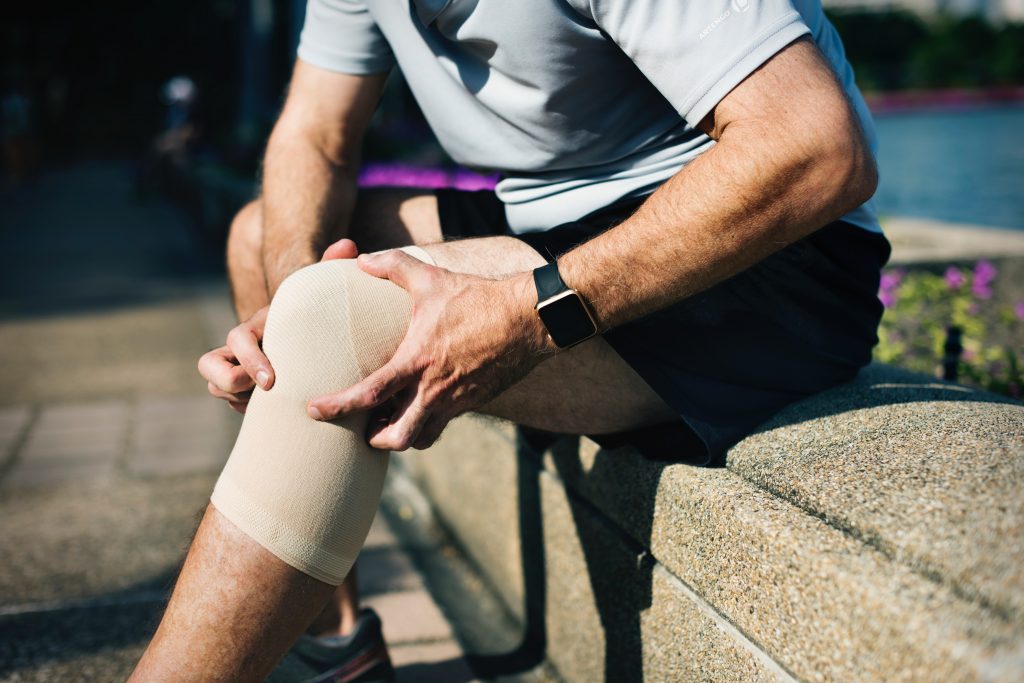
Here are the 2 best methods for sports injury treatment, or you can utilize a combination of both of them. The go-to method to help relieve pain and swelling and promote healing and flexibility after an injury was to use a method called “RICE” Rest, Ice, Compression, and Elevation.
There is also another version called “PRICE” which adds the “P” for Protection to prevent further injury from happing. For example, say you have an injured foot or leg you can protect the injury by limiting or by avoiding weight-bearing on the injury by using crutches, a cane, or even hiking poles. Also, you can partially immobilize the injured area by using items such as a sling, splint, or brace this will also help to protect the injury.
You would do this as soon as possible after an injury, such as a knee, ankle, wrist, and elbow sprain. There are other ideas out there today which includes another method called “METH” Movement, Elevation, Traction, and Heat.
RICE
Of the 2 Best Methods for Sports Injury Treatment, the first is RICE
- REST – The idea here is to stop, change, or just take a break from the activity that may be causing your pain or soreness. This rest may be all you need to help protect the injured or sore area. If the injury is too painful you may have to utilize Ice, Compression, and Elevation.
- Ice – The Cold will help reduce the pain and swelling. Apply an ice or cold pack as soon as possible to help prevent or minimize the swelling, this will also help to reduce the pain. Apply the ice or cold pack for up to 10 to 20 minutes at a time, you can do this 3 or more times a day. If after 48 to 72 hours, if the swelling has gone down you can start applying heat, apply heat to the injuries area. When applying ice or heat do not apply directly to the skin. Utilize a towel to cover over the cold or heat pack before applying it to the skin.
- Compression – Compression, or wrapping the injury or sore area with an elastic bandage (such as an Ace wrap) or a pre-made support, will help to decrease swelling. Do not wrap the area too tightly, this could cause poor circulation and can cause more swelling below the affected area. Loosen the bandage if it gets too tight. Signs that the bandage may be too tight be some numbness, tingling, coolness, increased pain, or more swelling in the area below the bandage. If you find that you need to use a wrap/bandage for longer than 48 to 72 hours you should have the injury looked at by a doctor, you may be a more serious injury than you think.
- Elevation – Elevate the injured or sore area and rest comfortably on a pillow or some other method while applying the ice, also anytime you are sitting or lying down to support the injury. Try to keep the area at or above the level of your heart to help minimize swelling.
You may decide to use some medications such as Nonsteroidal anti-inflammatory drugs (NSAIDs) they may help relieve your pain and swelling. They include such medications such as:
- Ibuprofen, such as Advil or Motrin.
- Naproxen, such as Aleve or Naprosyn.
Make sure you know which medications are safe for you. I myself cannot use these medications; I can only use Acetaminophen based medications, so check with your Doctor. I also think if you do require medications for more than 48 hours you should really see a doctor. Be safe with any medications read and follow all instruction on the label.
When your soreness and pain is almost completely gone you may begin stretching and strengthening exercises slowly, then gradually increase these exercises. Your body should let you know. Be careful though some people have a high pain threshold blocking out the pain. They may think they are getting better than they really are. If you think you have a high pain threshold then listen very carefully to your body. I myself have a very high pain threshold and have not listened to my body which has caused me to injure myself even more so, making my recovery time a lot longer.
Check out this video on the RICE method.
Thanks to ReflexClinic
METH
Of the 2 Best Methods for Sports Injury Treatment, the second is METH.
So as mentioned above the go-to method to help relieve pain and swelling and promote healing and flexibility after an injury was to use the method which was called “RICE Rest, Ice, Compression, and Elevation. This has always been the traditional approach to treat swelling, pain, and manage internal bleeding and the standard taught in first aid courses.
However, there is a newer more memorable mnemonic out there and if the athletic trainers are correct the “METH” method could be even more effective.
So instead of “RICE”, some trainer’s and athletes and say METH (movement, elevation, traction, and heat) is actually more helpful for in the treatment of sprained knees, rolled ankles, pulled hamstrings, and other such minor sports injuries.
The acronym “METH” was first coined by a Toronto-based trainer and exercise physiologist John Paul Catanzaro. In 2012 he rolled his ankle but instead of applying the “RICE” method, he rehabilitated his ankle by deliberately moving and working the muscle. He also applied “moist heat” to his ankle sprain, this was the complete opposite of the standard RICE approach. Catanzaro claimed his ankle was healed and fully functional the next day.
Catanzaro, as well as some doctors, criticizes the icing method in RICE for its effect on slowing down the blood circulation, when the blood flow is slowed down, so is the healing process. Ice may have originally been added in as the cure-all for injuries because of its ability to cool down the immediate pain of the swelling process. It would reduce the amount of blood and constriction in the area, and therefore help to ease the pain and spasm.
The ice vs. heat argument is not really that new; it has been around for quite some time and previously suggested that once the swelling is gone applying heat would help bring back circulation and help with the stiffness and soreness. Heat never seemed like the obvious choice in sprain treatment because the other elements of RICE appeared to discourage blood flow in the area. The purpose of elevation, for example, was to keep the affected limb above the heart, so that more blood would not flow to the injured area and create pressure. Compression was also meant to reduce swelling in the injured area.
Well, either way, it seems that a balance between the RICE and METH methods are important for the healing process of minor musculoskeletal injuries. Do not rest to the point of inactivity– continue to slowly move and stretch the muscle of your injured area, but with caution. If there is swelling and pain medications are not doing the trick, try icing for a short period of time, but once that is gone, apply heat if your joint feels stiff and tense.
Fortunately, the one thing both RICE and METH methods have in common is the elevation. So maybe using a combination of both of the 2 Best Methods for Sports Injury Treatment Rice and the METH, you should have all your bases covered for a speedy recovery back to full musculoskeletal function. Remember to listen to your body and do not rush your recovery or you may end up injuring yourself more.
Let us know what you think of the RICE vs. METH method in the comments below! Or if you have a different acronym or method, please feel free to let us and the readers know.
Check out this video using METH
Thank to DrCharlesSimone
